.png)


Summer is here! A practical guide to mountain running kit for training in the UK hills.


The sun shone briefly, the temperature rocketed upwards and we got a little excited about the prospect of those light and airy runs where you don’t have to carry the kitchen sink just to head up a local hill.
But what is a reasonable amount of kit to carry when heading into the mountains in a UK
summer?
As runners, we are already travelling a lot lighter than our hill walking buddies. While we’re
floating through the mountains we can get away with little more than a vest, some probably too short to wear in public shorts and some grippy daps. But what happens if we need to stop? Maybe we become injured, or maybe we come across another hill user who is unwell.
This blog aims to give you some practical guidance on how to make that kit judgement
call for yourself.
Essentials all year round:

Map & Compass – Providing you know how to use them of course! * Regardless of if we are on terrain that we know intimately, we think it’s always good practice to carry a map and compass.
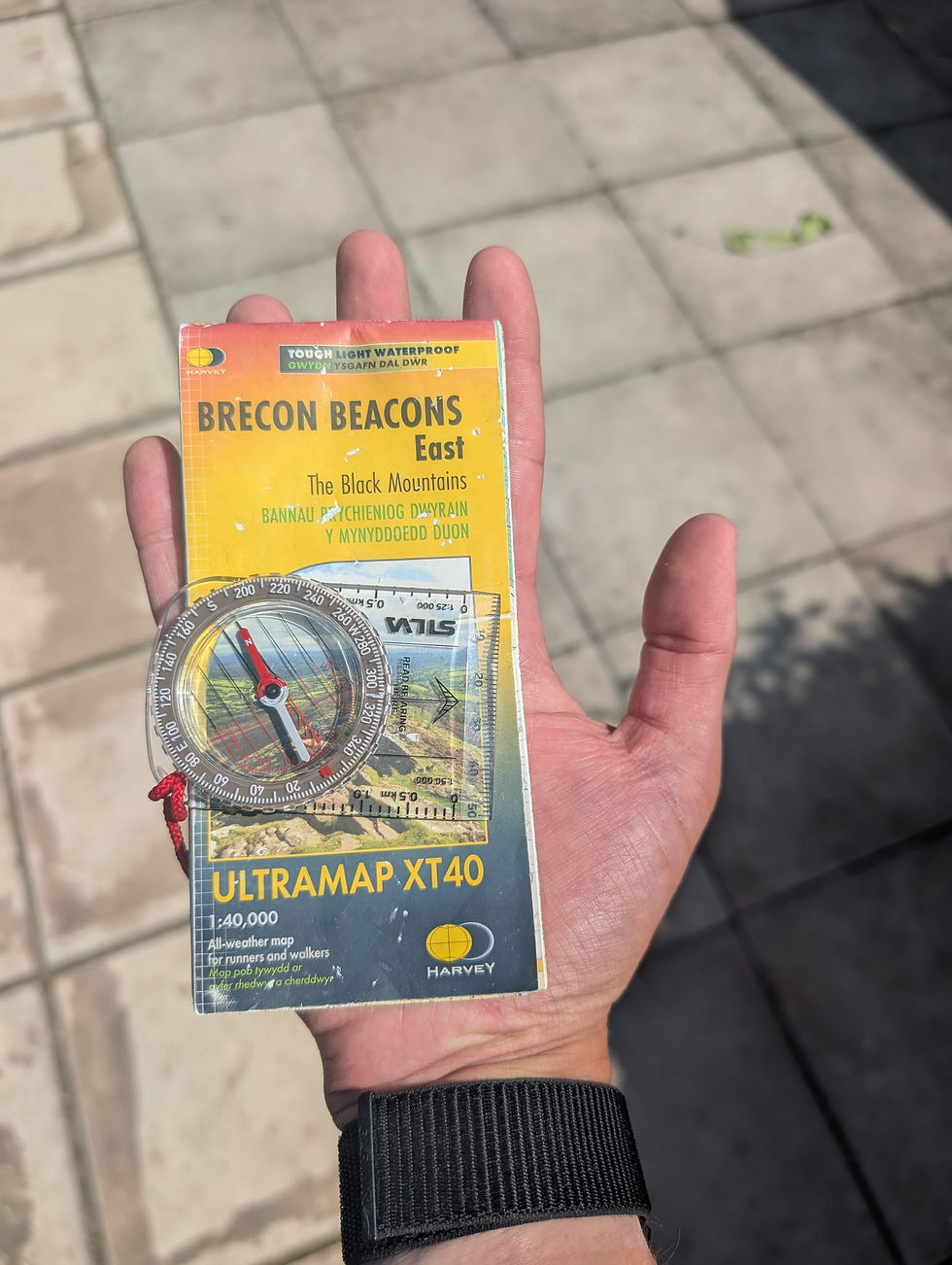
If we are in familiar terrain, its primary function might only be to show a topographically embarrassed hill goer their route back to the car. But if we’re off adventuring on new ground, the map and compass is fundamental to us understanding the terrain we are navigating.
We are by no means anti-tech. We absolutely use the OS maps app and load gpx files onto our watches, but a map and compass weighs next to nothing if you go for a lightweight option and can be invaluable if you need to reroute, understand the terrain you are in or your tech dies.
*We deliver navigation courses specifically for runners! Check out our next course dates at:
Windproof top – if you are completely sold on the weather forecast and confident there is no rain coming (not that often an occurrence in the UK mountains as it turns out!) – the windproof top is the lighter weight, less boil in the bag version of the waterproof.
It is amazing how much protection such a simple piece of kit can provide. From keeping the
wind off you on exposed summits, to providing some sun protection or fending off that light shower that wasn't, we think it’s well worth investing in a good windproof. We tend to go for one with a hood as it adds very little weight or bulk and a decent one will pack down to the size of an apple.
Mobile phone – Not just for selfies and Insta updates. The mobile phone is our communication to the indoor world should we change plan or find ourselves in peril and in need of assistance.

Using apps such as OS Maps can also provide us with detailed mapping of our route.
A top tip for our spectacle wearing friends: Download offline maps in OS, turn your phone to airplane mode to conserve battery life and use the app like you would a paper map but with the ability to zoom in on micro-nav features. We still recommend carrying a paper map for when you drop said phone in a bog or smash the screen on some boulders (speaking from experience!).
Emergency bivvy/survival bag – The piece of kit we never hope to use, but we always carry. The emergency bivvy provides weather protection in an emergency where we need to stay put and wait for help. In hotter weather, it can act as sun protection. During the winter, we carry a slightly heavier duty option, but we’ll talk all about that in the winter run down!
First aid kit – Not your belt and braces for every possible scenario type first aid kit. We are
talking a few practical items that would resolve a small issue or slow down a significant issue until help arrives.
Our own personal first aid kits comprise of things like a bit of K-Tape, some painkillers, antihistamine and personal medication… oh and emergency loo roll and a poo bag in case we get caught short!
Fuel & Hydration – If it’s a short easy intensity run (sub 60 minutes) in cool conditions, an
emergency gel or pack of wine gums might be all you need for an unforeseen energy dip. But if we’re heading out for multiple hours, fuelling and hydration is essential. We will do a whole blog on practical fuelling for mountain adventures.

Hot weather considerations:

Water filter – In hot weather, this piece of kit alongside some careful route planning to cross water sources is basically the only reason we can continue to run high in the mountains. Unlike the alps where you can buy an overpriced Orangina at the top of each climb, in the UK we need to be self-sufficient and that includes not dying of dehydration.
Water filters can be a separate system, but we tend to opt for the type that can fit into the top of a running squidgy bottle.
Sunglasses – Needs no explanation really! It’s always a positive if we can see the ground in front of us, protect our eyeballs and look pretty sharp in the process!

Sun cream – The higher the SPF, the fewer the chemicals that destroy water sources and the less sticky the better. There is now a good variety of sun cream that has been developed for use during high output activities so you don’t necessarily have to look like a cricketer to go run in the hills.
Sun hat & sun hoody – Sun cream eventually washes off, so it’s a no brainer that we try to cover as much of our body as possible when running in hot weather. There are some breathable sun hoodies and fetching bucket hats on the market these days. You don’t need to rock the Crocodile Dundee hat unless you want to.
Changeable weather:
Waterproof top and bottoms – A fundamental piece of safety kit that needs to be carried 99.9% of the time in the UK. Waterproofs are not just about keeping us dry. Their primary use in the context of mountain running is full body wind protection which can regularly be the difference between having a pleasant day out or becoming hypothermic.

There are so many different types of running waterproofs that all have their specific pros and cons. If you don’t have the luxury of multiple options here, we would recommend going for something straight down the middle in terms of breathability and packability so that it can be used year-round.
Insulating top – It might seem crazy to suggest that you might need an insulating layer in summer, but we can both confirm that we have deployed this layer regularly in the summer months. A basic rule of thumb that we follow is that if the "feels like" temperature on the most exposed part of your run is 10 degrees +, a lightweight fleece or merino base layer as a back up in your pack/bum bag should be enough. Less than 10 degrees and we are opting for a lightweight synthetic insulated jacket instead. This is obviously highly personal as everyone experiences temperature differently.
Hat & Gloves – As the temperature plummets on those exposed ridges, it’s easy to lose
dexterity in fingers and lose body heat through the head. A small packable warm hat or buff and set of gloves in conjunction with a set of waterproofs can give you full body cover from the elements in a very small pack size.

What to consider when making your kit choices:
Weather – Remember the old rule that for every 100 metres above sea level you ascend, the
temperature will drop by 1 degree. Add in wind chill and the chance of showers and you could end up needing to carry your full winter kit in the height of summer!
As an example – we recently (in June) did an easy run on Yr Wyddfa in Eryri. The temperature at the start of our run was 16 degrees and we started in vest and shorts. By the time we were above 800m, with the bitter northerly winds and clag, both Bethan and I were running in our waterproof jackets and gloves in what felt like sub-zero temperatures. We had a great adventure but if we had needed to stop for any reason, we would have needed the bottoms and insulating layers we were carrying.

This can go the other way as well. Spending the day on an exposed ridge in 30-degree heat is asking for trouble – especially if you are ginger (soz Bethan!). Caking yourself in sun cream, carrying A LOT of water and covering up from the sun as much possible helps a little. It’s much harder to escape the heat than it is to wrap up from the cold in exposed places. Try to plan your runs for cooler parts of the day and ensure you have escape routes planned to get out of exposed places quickly if the temperature rises.
What is the most exposed and remote part of your route? – We base our kit choice on the
likely weather conditions at the most exposed part of our route. How much kit would we need to stay still in that location for multiple hours? Even in a relatively easy access area of the hills, it will likely take a mountain rescue team around 2 hours to get to you.
Hopefully this blog has provided some insight into the thought process behind the kit we carry and helps you in making your own choices about what to carry/not carry on your mountain running adventures.
This guide is based on our personal experience of what is appropriate kit to take to be self-
sufficient in the mountains in summer conditions. This does not reflect what we would carry if we were responsible for leading a group where the amount of kit we carry would increase quite significantly.
As always, we promote the Adventure Smart campaign
Ask yourself 3 questions before you set off:
– Am I confident I have the KNOWLEDGE & SKILLS for the day?
– Do I know what the WEATHER will be like?
– Do I have the right GEAR?
To find out more about adventure smart, check out their website:


Comments